
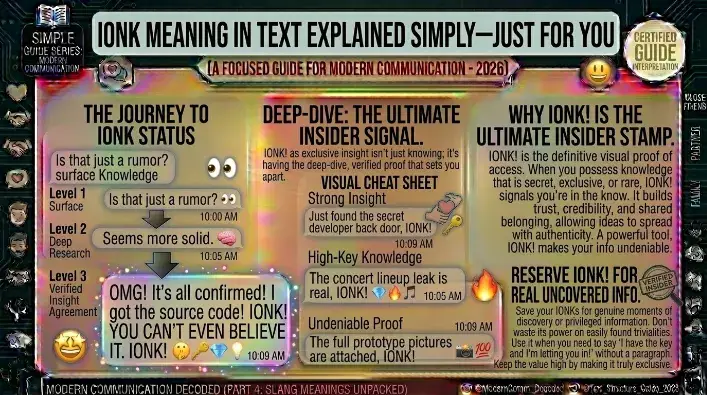
Scrolling through a chat and someone just replied “ion” or “ionk” and now you’re stuck? You’re not alone. Texting slang moves fast, and these two are everywhere right now — in DMs, group chats, and comment sections. So what does ion mean in text? In most cases, it simply means “I don’t.” And IONK takes it one step further, meaning “I don’t know.” Once you know this, half the confusing texts in your inbox suddenly make sense. This guide breaks down both terms, shows you exactly how people use them in real conversations, and clears up the confusion around similar-looking terms like “lonk” — all in plain, simple English.
What Does ION Mean in Text?
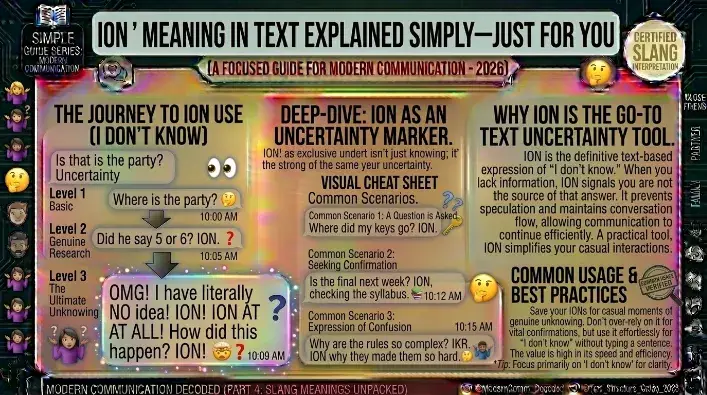
ION stands for “I don’t.” It’s a fast, lowercase way of typing “I don’t” without hitting extra keys — popular on iPhones because of how autocorrect and swipe-typing predict words.
- Meaning: I don’t
- Usage: “ion really care what he thinks” (Instagram comment)
It’s almost always used casually, in place of “I don’t,” and rarely capitalized. You’ll see it most in Gen Z texting culture, TikTok comments, and Twitter/X replies.
What Does I O N Mean in a Text? (Spaced-Out Version)
Sometimes people type it as “i o n” with spaces, especially for emphasis or stylistic effect. It carries the exact same meaning — “I don’t” — just written with more visual weight, often for dramatic or joking effect.
- Meaning: I don’t (same as “ion,” just styled differently)
- Usage: “i o n know why you’re mad” (Snapchat caption)
What Does IONK Mean in Text?
IONK stands for “I don’t know.” It’s simply “ion” (I don’t) plus “k” (know), combined into one quick word.
- Meaning: I don’t know
- Usage: “ionk what time we’re leaving tbh” (WhatsApp group chat)
This is the term most people are actually searching for when they type “what does lonk mean in text” — it’s a common typo, since “lonk” and “ionk” look similar when typed fast on a phone keyboard.
ION and IONK in Everyday Conversations
Here are natural, real-world examples of how these terms show up across different tones and platforms. Each one shows the meaning in context so you can use them correctly yourself.
Casual / Texting Examples
- “ion feel like going out tonight” — Meaning: I don’t feel like going out. Usage: text to a friend.
- “ionk if I’m free Saturday, lemme check” — Meaning: I don’t know if I’m free. Usage: replying to plans.
- “ion trust that app tbh” — Meaning: I don’t trust that app. Usage: casual opinion in chat.
- “ionk what happened, ask her” — Meaning: I don’t know what happened. Usage: deflecting a question.
- “ion want pizza again lol” — Meaning: I don’t want pizza again. Usage: light, joking text.
- “ionk why he’s acting weird” — Meaning: I don’t know why he’s acting weird. Usage: venting to a friend.
- “ion do mornings, sorry” — Meaning: I don’t do mornings. Usage: turning down an early plan.
- “ionk but we’ll figure it out” — Meaning: I don’t know, but we’ll figure it out. Usage: reassuring reply.
Social Media Examples
- “ion get the hype around this show” — Meaning: I don’t understand the hype. Usage: Instagram comment.
- “ionk who started this trend” — Meaning: I don’t know who started this. Usage: TikTok comment.
- “ion post my face that much” — Meaning: I don’t post my face much. Usage: bio or caption context.
- “ionk but this song is stuck in my head” — Meaning: I don’t know (why), but it’s stuck. Usage: Twitter/X post.
- “ion care about likes fr” — Meaning: I don’t care about likes, honestly. Usage: caption under a post.
- “ionk if this is even true” — Meaning: I don’t know if it’s true. Usage: replying to a viral post.
- “ion follow trends I don’t like” — Meaning: I don’t follow trends I dislike. Usage: comment reply.
- “ionk but it’s funny either way” — Meaning: I don’t know, but it’s funny regardless. Usage: meme caption.
Emotional / Real-Talk Examples
- “ion know how to explain how I feel” — Meaning: I don’t know how to explain my feelings. Usage: vulnerable text to a close friend.
- “ionk if I’m okay honestly” — Meaning: I don’t know if I’m okay. Usage: checking in with someone you trust.
- “ion wanna talk about it rn” — Meaning: I don’t want to talk about it right now. Usage: setting a boundary in chat.
- “ionk what I’d do without you” — Meaning: I don’t know what I’d do without you. Usage: expressing gratitude.
- “ion regret it, but it still hurts” — Meaning: I don’t regret it, but it still hurts. Usage: reflective message.
- “ionk how to move on from this” — Meaning: I don’t know how to move forward. Usage: opening up to a friend.
- “ion blame you for leaving” — Meaning: I don’t blame you for leaving. Usage: closure text.
- “ionk but I’m trying my best” — Meaning: I don’t know, but I’m doing my best. Usage: honest check-in reply.
Funny / Playful Examples
- “ion know her but I support her” — Meaning: I don’t know her but I support her. Usage: joking meme comment.
- “ionk, ask the WiFi” — Meaning: I don’t know, playful deflection. Usage: joking group chat reply.
- “ion do math past 9pm” — Meaning: I don’t do math past 9pm. Usage: humorous excuse.
- “ionk why my plants keep dying” — Meaning: I don’t know why the plants died. Usage: lighthearted complaint.
- “ion cook, I just heat things up” — Meaning: I don’t cook, I just reheat food. Usage: funny self-roast.
- “ionk but google says I’m right” — Meaning: I don’t know, but Google agrees. Usage: joking argument-ender.
- “ion do Mondays on principle” — Meaning: I don’t do Mondays, as a rule. Usage: humorous complaint post.
- “ionk, vibes told me to” — Meaning: I don’t know, I just went with the vibe. Usage: playful excuse.
How to Use ION and IONK Naturally
Getting the tone right matters more than getting the spelling perfect. Here’s how to use these terms so they sound natural, not forced:
- Keep it lowercase. “ion” and “ionk” almost never appear capitalized in real texting.
- Use it for casual replies only. Avoid it in formal messages, emails, or professional chats.
- Match the emotional tone. “ionk” works well for uncertainty, “ion” works well for stating what you don’t want or feel.
- Don’t overuse it. One or two per conversation feels natural; using it in every sentence feels try-hard.
- Pair it with real feeling. These terms land best when the rest of your message sounds genuine, not scripted.
Tips to Make Your Messages More Personal
- Add specific details instead of generic replies — “ionk, maybe Friday?” beats a flat “ionk.”
- Mix slang with real emotion so it doesn’t sound robotic.
- Use punctuation (or lack of it) intentionally — dropping periods often reads as more casual and warm.
- Read your message out loud before sending — if it sounds like something you’d actually say, it works.
FAQs
What does ion mean in text messages?
It means “I don’t.” It’s a shortened, casual way people type “I don’t” in texts, DMs, and comments.
What does ionk mean in text?
It means “I don’t know.” It combines “ion” (I don’t) with “k” for “know.”
What does lonk mean in text?
“Lonk” isn’t a standard slang term — it’s usually a typo for “ionk,” which means “I don’t know.”
What does i o n mean in a text?
Spaced out as “i o n,” it means the same thing as “ion” — “I don’t.” The spacing is just a stylistic choice.
Is ion always spelled lowercase?
Yes, almost always. In texting culture, “ion” and “ionk” are written in lowercase to keep the casual, quick tone.
Where did ion and ionk come from?
They come from fast, informal typing habits — dropping the apostrophe and blending words together, popular in Gen Z texting and social media comments.
Conclusion
Slang like “ion” and “ionk” might look confusing at first, but once you know they simply mean “I don’t” and “I don’t know,” every text starts to make sense. They’re quick, casual, and everywhere — from group chats to comment sections. Now that you’ve got the meaning down, you’ll never have to pause and wonder again.
